I rebuilt my house and my brain in the same place.
The methodology is not a framework I wrote down later as theory. It is the operating system of a person who had to rebuild from zero, and used what worked. It was tested under conditions most methodologies never are. That is part of why it is trustworthy.
In 2020, I lost everything.
Not some things. Everything. Memories, identity, how the world worked, the names and faces of my kids. A head injury, complete and total memory loss. Unlike the movies, mine never came back. So I rebuilt. Not recovered. Every belief and mental model had to be picked up, examined, and deliberately chosen. Most people's defaults come preloaded. Mine had to be earned.
My body remembered them before my mind did. A visceral yearning that said these people matter, with no memories to attach to it. Then one day it dawned on me. I had not lost their memories. I had lost mine. Theirs were still alive inside them. I just had to learn how to get them out.
That became the question that drives every engagement now: how do I understand what someone else knows that I do not?
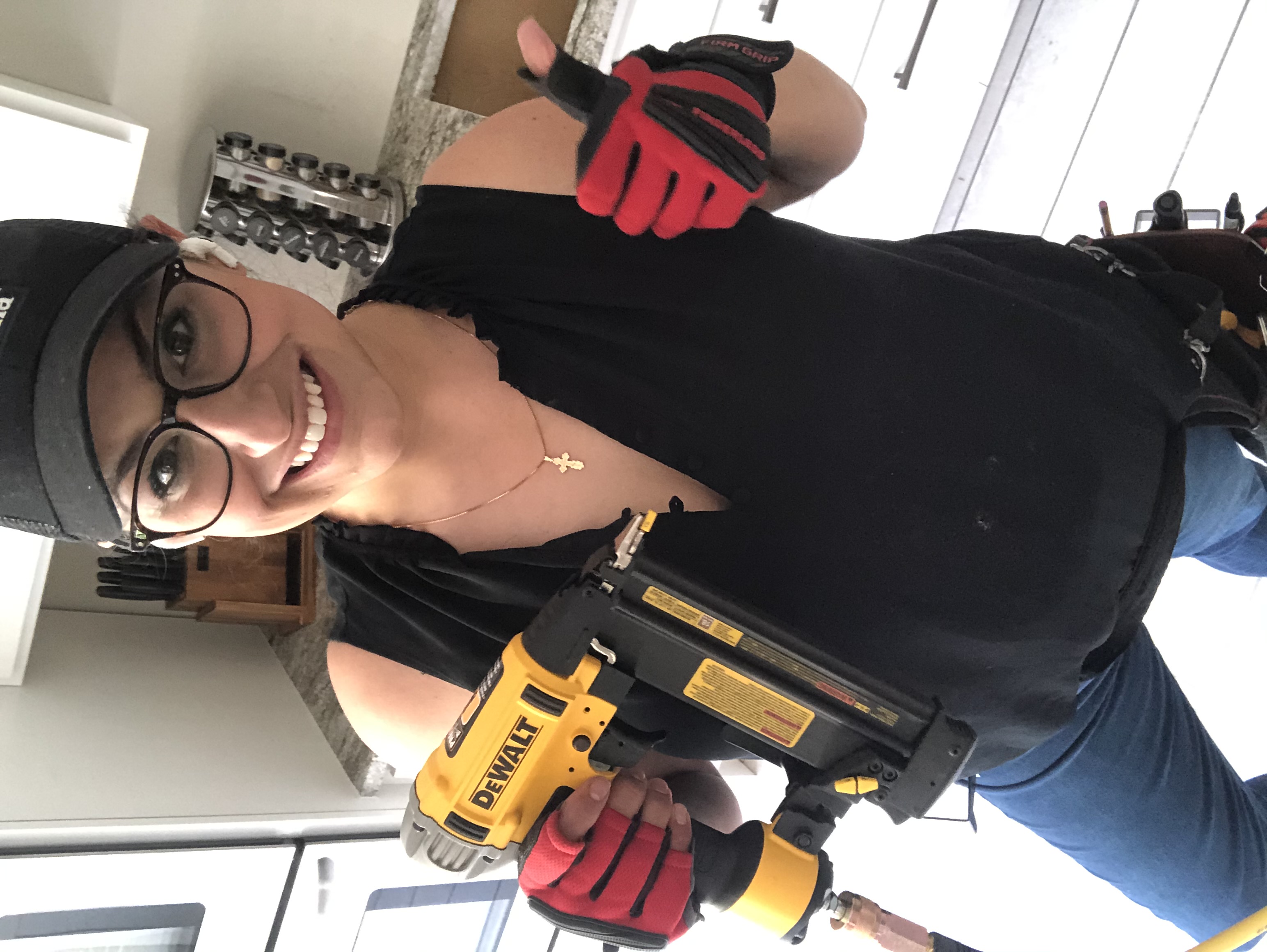
The constraintI could not read, or use screens for more than minutes without my brain seizing. Traditional cognitive rehab was screen-based, and it was Covid. So I asked my neurologist to clear me to install outlets and lay flooring instead of doing puzzles. He did. I rebuilt my house and my brain in the same place, at the same time, with my hands. The street was Whiterock Road.
The budgetEarly on I had a fixed amount of processing to spend in a day, and it ran out fast. It has normalized since. But when every step cost me something I could feel, friction stopped being background noise. Every time I hit one I reverse engineered a way around it, because I could not afford to pay for it twice.
Most people have normalized their friction. Dread, delay and difficulty stop looking like problems and start looking like the job.
The methodologyA friend invited me to Clubhouse, where the best UX designers on the planet had gathered to teach user-experience research as the world went digital overnight: the exact discipline my mission required. I had no social conditioning telling me who was allowed to ask questions in a room like that. I just had a mission. So I asked the same four questions of every senior practitioner I could reach. The resources became my curriculum. The questions became my pick axe.
Why AI clickedMost people came to AI carrying years of sci-fi narratives, fear, and hype. I came in without any of it. I did not remember the narratives, and I had no picture of where AI was supposed to belong.
I just saw a tool.
So I did not point it at rewriting emails. I pointed it at whatever was costing the most: a system nobody had mapped, or a brief that reverse engineers the friction in someone's week and gives them the bandwidth back. I approached it the way I approach broken systems. Start with friction, not tools. Map what is actually happening before recommending anything. Build what removes the weight without losing what is human. Whiterock Road is the practice that brings that lens to leaders.
The unexpected partThis is not a story about loss, and I do not tell it for sympathy. The reset took my design bias with it: the inherited assumptions about how a problem is supposed to be solved. What was left turned out to be the part that mattered: I ask questions relentlessly until I understand the whole problem, and I am strong at reverse-engineering the one thing that actually works for the person in front of me. Not a generic best practice. Their version of good.
Why this matters for your AIHere is what rebuilding my own model of good taught me about the technology. AI is always guessing at your version of good, and when it has to guess, it defaults to the average of everyone's. I had no choice but to make mine explicit. Most people never do, and that, not the technology, is the reason AI so often misses.
You should not have to lose your memory to learn this. The work is to start documenting your good today.
Every step I use with clients, I learned rebuilding.
- 1
Map what's really happening
My kids' memories were still in them. I had to learn how to get them out. Your team's know-how works the same way.
- 2
Define what good looks like
Nothing came preloaded. I had to choose what good meant, on purpose.
- 3
Build it
I rebuilt my house and my brain in the same place, trade by trade.
- 4
Hand it back
You shouldn't have to lose your memory to learn this.
Before the reset, the throughline was already there.
In 2018, two years before the injury, a different version of me (Jennifer, then in HR project management and storytelling at HatDrop) gave her first talk on a DisruptHR stage in Minneapolis. Five minutes, twenty auto-advancing slides. The title was “Blueprints Don't Sell Cars.”
The point was simple: a spec sheet never moves anyone. The story does. I lost the memory of giving that talk. I never lost the idea.
Back then I only showed what I could do when someone pushed me to. That talk happened because a person saw it and dared me to use my voice bigger. The injury took a great deal. It never took the ideas; you can watch them already there in 2018. What it took was the quiet conditioning that told me my voice did not matter. Rebuilding without it is the real unlock, and it is the same thing this practice runs on: get the blueprint right, then say it out loud.
Watch the 2018 talk · 5:22This is me, putting my flag in the ground.
The work is not new. For years it has shipped, through consulting firms, for clients paying for it right now. Roots in HR technology and talent acquisition. Agents built and running in production. Whiterock Road is not a tentative first step; it is my name on work I have already been doing, in my own voice, on my own terms.
More about Jenny.
Who is Jenny Cotie Kangas?
The founder of Whiterock Road, a fractional forward-deployed engineer and Builder Coach. After losing her memory completely in 2020, she rebuilt her own version of good from zero, and now helps people find the friction worth fixing, point AI at it, and teach their team to run it. She also goes by Jenny Neuharth and JCK.
What is Jenny's approach to AI?
Start with friction, not tools. Right is subjective to each company and team, so she works out what good looks like for you first, then reverse engineers the build toward it and teaches you to keep it going. One size fits one.
What is a Builder Coach?
Someone who builds with you and teaches you to build, so the capability stays after the work ends. You get something working now, and the how if you want it.
How do I work with Jenny?
Book a 30-minute intro, or email jenny@whiterockroad.org. Name the friction you keep hitting, and if it's a fit, you start there.
That is the lens. Let's point it at your work.
Name the friction you keep hitting. We will start there.